
Welcome to Brackendale Eagles
The art of loving art
Welcome to Brackendale Eagles
Our community is all about the art of loving art.


When art meets real money
Welcome to our website! Brackendale Eagles is a community of professionals who provide art consulting services in the Canadian province of Ontario. Read to learn more about us!
Explore our work and get inspired
At Brackendale Eagles, our team of professionals knows that each art project requires personalization. We offer our services to individuals and companies.
Traditional art

We believe that the traditional art mediums, such as painting and sculpting, still hold value to this day. They can be leveraged as strategic, competitive and lucrative assets for companies, if adjusted to our current times.
Digital art

We also know that the world of digital art brings endless opportunities, namely in terms of web design and user experience. However, that pure and classic artistic intention still needs to be the guiding light for every project.
Lifting the veil

We will talk more extensively about our wide range of art consulting services. For now, know that we operate in the areas of design, art acquisition, project budgeting and management, delivery and installation, and art curation, among others.

Be part of our journey!
Let’s start going through the journey of our family of artists, Brackendale Eagles. Our art consulting agency was founded in 2010 by Bethany Rush, an accomplished professional whose resumé includes successful works in web design and museum curation.
Bethany, who is now the director in our team, started all by herself once she rented an office in the township of Lucan, Ontario, where she gradually gave shape to a multitude of ideas for her business.
Five months in, Bethany recruited two other art professionals, as the number of clients was increasing quite nicely. The actual company under the name Brackendale Eagles was born! And the rest is history.
Nowadays, our agency is a community of over 30 experts in the most varied jobs in the art world. Most of us work full-time, while some are our regular partners.
The art of real money casinos
You can find a range of world-class slots with state of the art graphics by visiting a real money casino online. Players of all levels have the chance to win real money jackpots, as well as experience innovative works of art that create completely immersive gameplay. Mega Moolah slot is a great example of today’s artwork that can be seen online. This type of art is not only there to be seen but it also to be touched and experienced with your eyes, ears and heart. Thanks to the internet, art has taken completely new forms. Nowadays artists can work for instance as graphic designers and game developers and have their artwork spread out to each part of the world.

If you feel like you would like to be doing something current and are ready to think outside the box, working for a game provider or an online casino might be something to consider. To work in game companies you obviously need some other skills as well, being a great painter isn’t enough and won’t get you the job. But if you feel like you want to channel your artistic views in new ways, why not study graphic design?
By becoming a graphic designer you could easily have a job that lets you be as creative as you feel like, and get paid for it! There is still time for your other artistic work on your spare time: you could be a graphic designer at day and create paintings at night. What an awesome way to let your creative side have versatile options to bloom.
By reading our articles you’ll learn more about art in traditional ways but in the digital world as well. Be a part of the future and follow our site regularly.
Support our artistic community
Support our agency by sharing us on social media, sending in your suggestions or applying to write for our blog.
Art drives our work
As you have read, our motto is: the art of loving art. And we believe that no phrase could ever express the essence of our work any better.
Every day, we strive to become better professionals while we keep adapting to the times, the market demands, the needs of our clients and the evolution of art. And all that motivation stems from our love for the arts.
Our mission in Brackendale Eagles is to prove the lasting impact of combining the traditional and modern art mediums to improve society, culture and businesses. Whatever goal our clients are trying to achieve through our services, we want art to be a vehicle for all the achievements.
Our vision is to become, within the next three years, the leading art consulting provider in the province of Ontario and one of the top three in Canada.
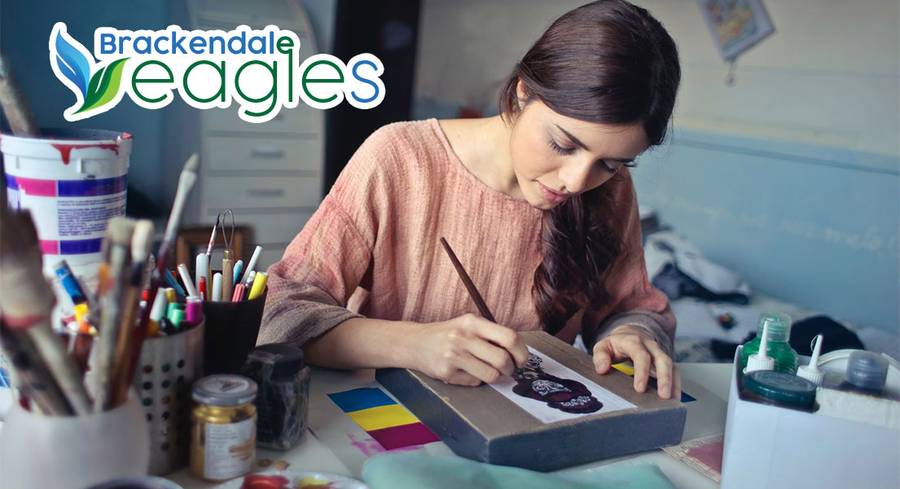
What services can we provide you with?
As a company or an individual, you can benefit from a broad array of services provided by Brackendale Eagles. Learn all about them.
Design

Whatever your personal or professional project, we design the perfect artwork, offline or online, that fits with all the needs, demands, goals and specificities. Don’t worry about having a tight budget or an outside-the-box vision. Our work is to adapt to you and to allocate the best designers and resources.
Art acquisition

Brackendale Eagles is able to put you in touch with proprietaries and buyers, whether they are artists, museums, galleries or any other type of entity. We promote the relationships between artists and enthusiasts regionally in Ontario. To buy or to sell art, we are the partner for you.
Project management

An art project for a business can be hard to monitor. But web design and user experience efforts are essential for companies nowadays. There is no need to worry. We have the knowledge and the tools to help manage your project, even if you only need us to work remotely.